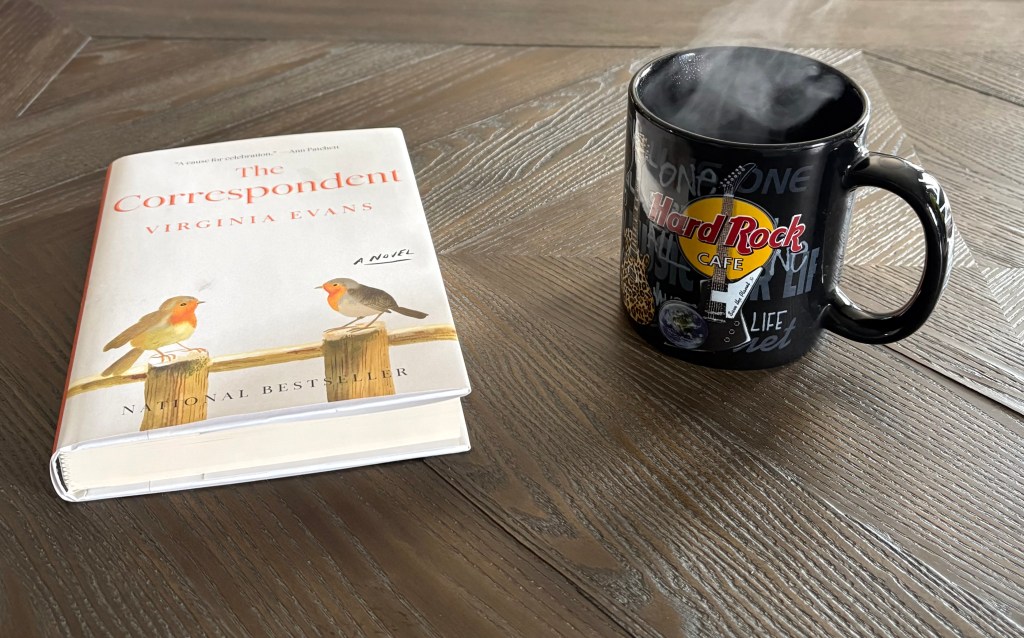
Last November, I wrote a post titled When a Story Finally Finds Its Moment, where I discussed an article I read in The Wall Street Journal about the novel The Correspondent by Virginia Evans. It took her a long time and a lot of work, but she finally had a breakthrough, thanks to the support of friends and a mentor, and became a New York Times bestseller. I just checked, and the novel is currently number five in Amazon’s Top 100. After reading it, I can see why it’s ranked that high—it’s excellent.
I’ve read that epistolary novels (stories told through letters) can be a challenge, but the author did a wonderful job with this one.
The novel centers around Sybil Van Antwerp, a retired lawyer who is divorced, a mother, and a grandmother. Sybil’s love of letter writing is central to the story, and it reminded me of Abigail Adams, whose biography I read recently. She was an avid letter writer. After learning about the many letters Adams wrote throughout her life—and how impactful they were—it becomes easier to appreciate the epistolary format Virginia Evans uses to portray Sybil’s life.
Through letters and emails (a brilliant bridge between the old and the new), Sybil’s life comes to life. This is one of those novels that takes readers on a rollercoaster of emotions, as Sybil experiences love, grief, regret, and reveals her humorous side.
Sybil’s life was changed forever after the loss of one of her children. The loss triggered a downward spiral that led to a divorce and strained relationships with her other children. She threw herself into her work to numb the pain, but it affected every aspect of her life. As she grows older, she finds herself living alone, sometimes refusing help from her children.
Throughout her letters and emails, we see her love for others, her mentoring of the young, and her desire to help those in need. Thanks to a DNA test gifted by her son, she also learns about her past and discovers a family she never knew she had, as she was adopted at a young age.
We also learn about the two men competing for her love, and how she ultimately chose the one I was rooting for.
Reading Sybil’s story, you quickly realize that you know people going through similar circumstances. For me, it also provided insight into the decisions our parents make and some of the reasons they sometimes refuse our help. I’m experiencing some of that with my mother, so it was helpful to see, through this fictional work, why that might be.
One part that caught my attention was Sybil’s explanation of the seasons of life. She said:
“There is an articulation of life one hears again and again. People will say, ‘oh, this is only a season’… if someone is in difficulty they’ll say ‘it’s only a season.’ Or if someone is having a new baby and in the sleepless nights, an older woman will comfort with this idea that the expanse of time is a season—a winter, I suppose? (rather, a hurricane season!)—and the season will change eventually to something sunnier. I take issue with this. There are… four seasons… we are born and grow through childhood in spring. We live those glorious, lively, interesting years of our twenties, thirties, forties in summer. We settle into ourselves in autumn… and in winter we age (brutally) and die.” (pp. 27–28)
There are also hints of humor throughout, such as when Sybil is planning to attend the funeral of her former boss, Judge Guy Donnelly, and can’t find anything to wear. In a letter to Rosalie, her sister-in-law, she writes:
“I’ve now stood before my closet on three occasions and leafed through what I own, and the only black anything I have anymore is a dress I was probably wearing in the 1990s, which dips down to the uppermost part of what used to be my cleavage, but which now resembles the skin of a raw plucked chicken.” (pp. 38–39)
Sybil is also an avid reader, and her letters often end with a description of what she is currently reading, along with the question, “What are you reading?” Of course, this encourages a response and opens the door for discussion.
One of the books Sybil recommends is Never Let Me Go by Nobel Prize winner Kazuo Ishiguro, which looks interesting, and I’m adding it to my reading list.
In the end, Sybil finds love, tries to mend her relationships with her children—especially her daughter Fiona—and is finally free from the pain of losing her son.
I’m glad I discovered this novel last year, and I highly recommend it to my community. I think you’ll enjoy it.
About the Author
Virginia Evans attended James Madison University for her bachelor’s in English literature. After starting a family, she went back to school for her master’s of philosophy in creative writing at Trinity College in Dublin, Ireland, where she had the good fortune to study under Carlo Gébler, Eoin McNamee, Claire Keegan, Harry Clifton and Kevin Power. She now lives in Winston-Salem, North Carolina, with her husband, Mark, two children, Jack and Mae, and her Red Labrador, Brigid.1
 Thoughts about leadership, history, and more
When a story is revealed through letters it certainly makes it convincing and so real Love the concept and the way it unfolds to reader
Thanks for sharing 🎉🎉
LikeLiked by 1 person
You’re welcome. That’s so true, and it feels fast-paced as you read the back-and-forth between the characters.
LikeLike
I hope it’s not untoward of me to say I’ve never seen such a steamy book picture! HAhahahah.
I didn’t realize you read fiction, too. If you like stories about how the military affects people’s lives, I would recommend No-No Boy by John Okada, which is about a Japanese-American who refused to fight in WWII and was thus imprisoned. The novel starts upon his release. If you enjoy epistolary novels in particular, check out Michael Kimball’s Dear Everybody.
LikeLiked by 1 person
😂 Steamy indeed! I’m trying to add more fiction to mix things up. I might need to check out that book. Thank you for the recommendation.
LikeLike
This sounds like a great book and I think the story would be one I’d love because of the letter-writing aspect. Coincidentally April is National Card and Letter Writer’s Month. You have this way Edward, of choosing books that seem to be on topic with a current National Month Theme – is that on purpose or happy accident?
LikeLiked by 1 person
Oh, this one was a happy accident. I didn’t realize we were celebrating that this month, cool! It’s a great, powerful story. She did a phenomenal job with the letter and email format. I think you’ll enjoy it. Thank you, Rose.
LikeLiked by 1 person
Hi Edward, this sounds like an excellent read. I saw it on LatinosUSA too.
LikeLiked by 1 person
Cool! I was just there. Thank you, Robbie.
LikeLiked by 1 person
A nice review but doesn’t sound like my cup of tea. I still remember having to get through Clarissa in college.
LikeLiked by 1 person
I have seen that one and thought to myself, “No, thank you.” It’s a tough one. The Correspondent is definitely not at that level.
LikeLike
Sounds like a good one, Edward. Thanks for the great review!
LikeLiked by 1 person
You’re very welcome.
LikeLiked by 1 person
Thanks for your review, Edward! I have several writer friends who’ve loved this book – one who actually met Virgina Evans! As Elizabeth said…on my list, too! Thanks for your recommendation. I always enjoy your insights. 💝😊💝
LikeLiked by 2 people
You’re very welcome, my friend. I think you’ll love the format.
LikeLiked by 1 person
I think so, too! Love your endorsement…sorry for the typo with Virginia’s name! 🤪❤️🤪
LikeLiked by 1 person
My brain autocorrected it. I know there’s a term for that, but I can’t remember it now.
LikeLiked by 2 people
LOL…thanks for the giggle. I wish my brain would autocorrect a little more! 😜😜😜
LikeLiked by 1 person
😂 You know I had to look it up, it’s called typoglycemia. 🤓
LikeLiked by 1 person
You are so good! Yes! Way to go, Edward! You’ve got me giggling over here. And I’m “cheers-ing” you with my coffee cup! (Maple pecan coffee with a splash of chocolate protein powder…yum!) 😉💝😉
LikeLiked by 1 person
“Cheers-ing,” nice! I’m about to have my afternoon cup, but yours sounds like a super cup, my friend. ☕️☕️ 🫶🏼
LikeLiked by 1 person
Enjoy! Big hugs!! 😘❤️😘
LikeLiked by 1 person
Thank you. 🤗
LikeLiked by 1 person
Link Edward, thanks!
Juan Ré
https://latinosenglishedition.blog/2026/04/08/book-review-the-correspondent-by-edward-ortiz/
LikeLiked by 1 person
Thank you so much, Juan. 🙏🏼
LikeLike
This sounds like something I need to add to me TBR list immediately!
LikeLiked by 1 person
It’s a quick and excellent read. I think you’ll enjoy it. Thank you.
LikeLiked by 1 person
Thank you for the review and recommendation, Edward. Although I have more books on my e-reader than I’ll ever live long enough to even start, this sounds like one I’d definitely enjoy.
LikeLiked by 1 person
You’re welcome, Terry. It’s a quick read because of the format—you read one letter or email and immediately want to see the response. The more of her background that is revealed, the more you want to know.
LikeLiked by 1 person
sounds like sybil has come full circle and it seems like a heartbreaking but beautiful journey
LikeLiked by 1 person
Indeed. I hope they turn it into a movie someday.
LikeLiked by 1 person
A thoughtful and well-articulated review. I appreciate the insightful connection between the novel’s themes and real-life experiences of aging, loss, and family relationships. Your personal reflection adds depth and authenticity, making this both informative and meaningful.
LikeLiked by 1 person
Thank you very much, John. 🙏🏼
LikeLiked by 1 person
It sounds like a fascinating story about the rich and contrasting experiences we encounter throughout life. About the blooming and decaying of relationships and circumstances that one way or another lead to our personal transformation. Not all are easy (grief, for example, is one of the more painful and transformative experiences), but if, in the end, we are able to forgive and make peace with ourselves and others, the human experience was already enhanced. Then, even the severity of life’s winter seems like a gentle farewell kiss. Thank you, Edward, for this wonderful and very reflective book review and passages. Much enjoyed! Sending you light and blessings and wishing you a beautiful day and week ahead! ✨🙏🍀🌞
LikeLiked by 1 person
Thank you for your thoughtful comment, Susana. I agree about the transformational power of circumstances. Grief is a difficult one, especially when someone loses a child, but there are many forms of grief—like growing up without a father. It can be hard to recognize that experience as grief and then find the right tools to transform it into positive energy and break the cycle. It is a lot of work, but in the end, as you said, forgiveness and peace can be found. Blessings, my friend, and I hope you have a wonderful rest of the week. 🙏🏼
LikeLiked by 2 people
I’m looking forward to reading this and have added it to my list!
LikeLiked by 2 people
Thank you, Beth. I hope you enjoy the novel as much as I did.
LikeLiked by 1 person
Thank you for defining epistolary – I was going to have to look it up. And the way you tied it to the Abigail Adams biography. Brilliant!
Isn’t it interesting how fiction can shed light on what we are experiencing? The power of a good (and insightful) story. Great review, Edward!
LikeLiked by 1 person
Thank you, my friend. I love fiction that teaches me something, especially something I can use to understand or solve a current issue.
LikeLiked by 1 person
I put a hold request on this book at the library and I’m waiting for my name to come to the top of the list. I’m glad to hear you enjoyed it. I didn’t read your review to the end in case it contained spoilers. 😀
LikeLiked by 1 person
Awesome! Just a couple of quotes to give an idea, but nothing too revealing.
LikeLiked by 1 person
Correspondence, in the days before email, constituted some writers’ most pithy contributions to posterity. Even now, sometimes, as I type in a one-reader response to some back-page comment, I can feel the energy reverberating forward…
LikeLiked by 1 person
I agree, and your comment is extremely valuable, my friend. Thank you.
LikeLiked by 1 person
Hahaha! Great reply! 😂👍
LikeLiked by 1 person
Thank you. 😊
LikeLiked by 1 person
Thanks, Ed. I enjoyed your review. You are so good at compelling us to read. I am adding it to my read list. Now when it gets read is in the future. I am working on my read list 2026 now though.
LikeLiked by 1 person
You’re welcome, Sandra, and thank you. Yeah, my 2026 list is packed, and I’ve added a few more in case I hit my goal early.
LikeLike
My list may increase. I love having one, lol.
LikeLiked by 1 person
It’s good to have one. It definitely helps with motivation.
LikeLike
Hi Edward. I enjoyed your review very much for The Correspondent. Thank you for introducing it to us. I’m adding to the topple! 😊
LikeLiked by 2 people
You’re very welcome. It’s a good one.
LikeLiked by 1 person
“The Correspondent” sounds fascinating. I will definitely put it on my list and order it today. You wrote an excellent review with excerpts from the book that do show the protagonists personality.
LikeLiked by 3 people
Thank you. I think you’re going to like it. Sybil is a fascinating character.
LikeLiked by 1 person
Your review has me believing it will be a favorite.
LikeLiked by 1 person
Thank you.
LikeLiked by 1 person
It sounds like an interesting and engaging book. Thanks Edward.
LikeLiked by 3 people
Absolutely! It’s a fast-paced story that can be read in a day or two.
LikeLiked by 2 people
Oooh this looks so good! I might have to order it! Thanks Edward 😊
LikeLiked by 3 people
It was really good. I think you’re going to like Sybil. Even with everything she is struggling with because of the loss of her son, she is a strong woman. The story of two men pursuing her was epic.
LikeLiked by 2 people
I’ll let you know once i read it ☺️
LikeLiked by 2 people
Really looking forward to that!
LikeLiked by 2 people
Sounds like a meaningful story. Life, loss, and grace all in one. Thankful for stories that help us understand and heal.
LikeLiked by 4 people
You’re welcome, Willie. It’s a really compelling story.
LikeLiked by 1 person
Thank you!! It sounds like you really enjoyed this one!
LikeLiked by 3 people
You’re welcome, my friend. Fiction isn’t my preferred genre, but I really, really enjoyed this one.
LikeLiked by 2 people