“People think we’re raising the alarm because human pressures are increasing, but that’s not the case at all. It’s just that we are learning how the planet works, and the more we learn, the more we realize how vulnerable she is.” — p. 27
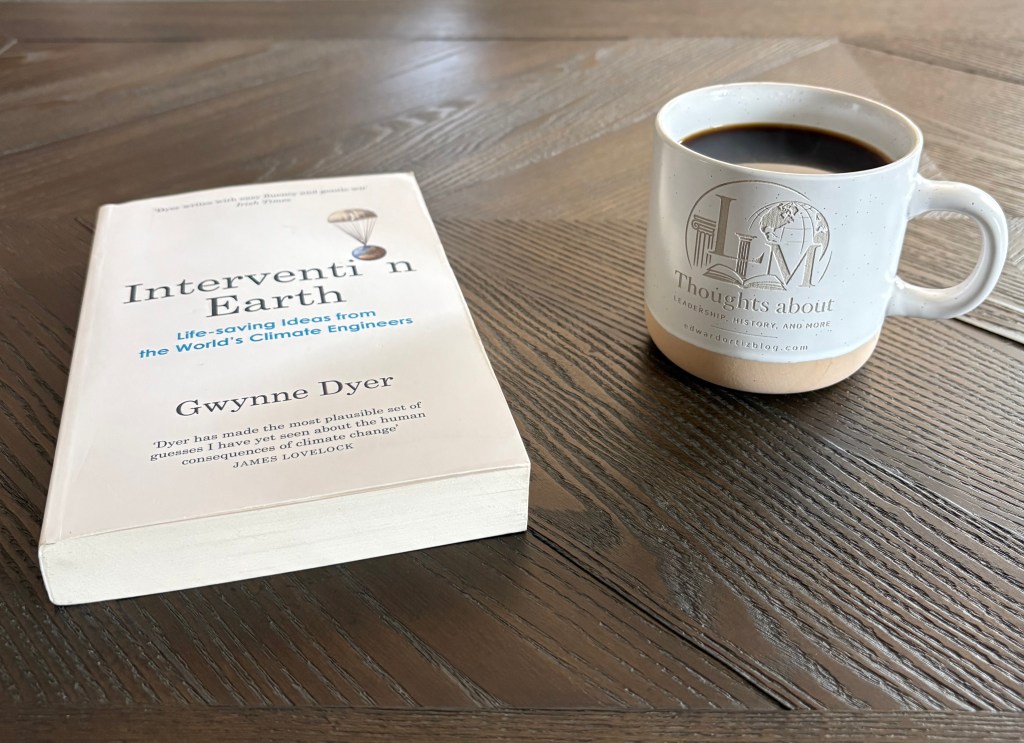
As controversial subjects go, climate change is near the top of the list. It is a complicated topic that requires scientists and politicians to communicate clearly in a way that people can understand. That is a tall order for those responsible for guiding the public.
One challenge is that scientific research is often difficult to translate into language that the average person can easily understand. Scientists work with specialized terminology, complex models, and enormous spans of time that are essential to their work but can overwhelm non-specialists. Once a discussion begins with, “Four billion years ago, when the Earth was formed…,” they lose half of their audience. Most of us have trouble remembering what happened 10 or 20 years ago, so trying to grasp events that unfolded over billions of years can feel almost impossible. That communication gap makes an already difficult subject even harder to understand.
Politicians face a different challenge. Climate policy is often shaped not only by science but also by economic interests, competing priorities, and the realities of winning elections. As a result, the public frequently receives mixed messages, making it difficult to know whom to trust. Consider, for example, the recent decision to reduce the size of two national monuments in Utah that are sacred to Native Americans in order to expand drilling, mining, and logging. Supporters argue that the decision promotes economic development and energy independence, while critics see it as sacrificing cultural heritage and environmental protection. It is no surprise that many people are left wondering what the right path forward should be.
I have come to the conclusion—and I think I have mentioned this to other bloggers—that it will take a series of catastrophic events before we truly take climate change seriously. That is why I found Intervention Earth by Gwynne Dyer to be such an excellent book. It helps readers understand the basics of the problem while also exploring the different ways we might address it.
The book was recommended by my blogging friend, Jane Fritz, in January of last year. She is no longer blogging, but I want to thank her for this wonderful recommendation.
After finishing the book, I did not feel as though I should panic because the world is about to end. It is definitely not one of those books filled only with doom and gloom. Instead, Dyer strikes an effective balance between explaining the urgency of climate change and offering hope. He argues that although humanity will face significant challenges, we also have an extraordinary ability to adapt and survive.
The author presents the material in a clear and accessible way through four parts: The Planetary Trajectory, All About Emissions, Climate Geopolitics, and Desperate Scientists and Last-Ditch Ideas. As part of his research, he interviewed more than 100 scientists, climate experts, and other professionals. He also includes a list of those experts in the back of the book so readers can research their qualifications and work further if they choose.
I never fully understood the Paris Agreement’s goal of limiting global warming to 1.5°C (2.7°F) until I read this book. There is so much political noise surrounding the issue that it is refreshing to return to credible sources that explain the science in plain language.
Part Two was my favorite, especially Chapter 6, in which the author examines today’s major energy sources—solar, nuclear, wind, and others—along with emerging technologies, carefully explaining the advantages and disadvantages of each.
Here are a few of the passages that stood out to me:
“Our planet is considerably further from the sun than Venus is. It will not experience the extreme conditions of that planet until the sun has heated up another 6 percent…actual human extinction is quite unlikely.” (p. 11)
On the importance of Arctic ice:
“The loss of the sea ice and of snow cover on land (both of which bounce most incoming sunlight back into space) will speed the warming throughout the region…the glacial melt-water raises the world’s sea levels.” (p. 32)
On hysteresis:
“Hysteresis. This is a term in physics which means that it’s easier to go through a change in one direction than to come back the opposite way. If raising the temperature by two degrees melts the Greenland ice cap, it will take considerably more than two degrees of cooling to start the ice growing again.” (p. 35)
On SUVs:
“The soaring popularity of Sport Utility Vehicles…is cancelling out almost all the emissions saved by the switch to electric.” (p. 114)
On agriculture:
“The biggest single source of greenhouse gas emissions in agriculture is livestock and manure: 5.8%…most of this is methane produced by ruminants: cattle, sheep, and goats…Methane is a relatively short-lived gas—most of it will decompose into carbon dioxide within 10 years—but during that decade it has eighty-six times the warming effect of a comparable volume of CO₂.” (pp. 127–132)
On the Arctic:
“The Arctic is now warming three or four times faster than the rest of the planet, and that’s already having major effects on the climate even in temperate parts of the Northern Hemisphere.” (p. 191)
Chapter 12 explores geoengineering techniques designed to combat climate change, including Carbon Dioxide Removal and Solar Radiation Management—an idea inspired by volcanic eruptions that release sulfur dioxide into the stratosphere and temporarily cool the planet. I found it fascinating to learn what scientists are currently researching and the enormous technical, political, and financial challenges involved. The author argues that these methods should be considered only as a last resort, but if that day comes, governments will have little choice but to invest the necessary resources.
Toward the end of the book, the author makes an observation that gave me pause. It reminds us that time is not on our side and that geoengineering, while possible, cannot replace reducing greenhouse gas emissions.
“The problem is too much heat and we know the solution: stop emitting greenhouse gases, then take the excess back out of the atmosphere to restore the atmosphere to what it was in, say, 1990. Unfortunately, that is a two-stage task: thirty years to stop GHG (greenhouse gases) emissions (Net Zero 2050), then another 50–100 years to remove the excess carbon dioxide and get back to an atmosphere and a temperature that suits us and all the other species that inhabit this planet.” (p. 304)
Politicians will likely continue to kick the can down the road, as the saying goes, delaying difficult decisions so they can maximize short-term political or economic gains while leaving future generations to deal with the consequences. In many ways, it reminds me of the ongoing debates surrounding the Social Security system in the United States.
This is an excellent book that will help readers better understand what climate change is and the options available to address it. I highly recommend it, even if, for whatever reason, you remain skeptical about climate change. At the very least, it provides a solid understanding of what the debate is about. Hopefully, it will also help you make better-informed decisions when the time comes to evaluate public policies and the proposals offered by our political leaders.
About the Author:1
Michael Gwynne Dyer is a British-Canadian military historian, author, professor, journalist, broadcaster, and retired naval officer. Dyer rose to prominence in the 1980s with the release of his television series War in 1983 and the publication of an accompanying book in 1985. Since the 1960s he has lived in London, England, where he works as a syndicated columnist. Dyer is a noted expert in Middle Eastern affairs, having completed his graduate work in this area and written several books on the subject. More recently he has focused on climate change and its geopolitical consequences.
 Thoughts about leadership, history, and more
From the website, this is so important to address and help convey to the public including myself:
Excerpt:
edwardortizblog.com
One challenge is that scientific research is often difficult to translate into language that the average person can easily understand. Scientists work with specialized terminology, complex models, and enormous spans of time that are essential to their work but can overwhelm non-specialists. Once a discussion begins with, “Four billion years ago, when the Earth was formed…,” they lose half of their audience. Most of us have trouble remembering what happened 10 or 20 years ago, so trying to grasp events that unfolded over billions of years can feel almost impossible. That communication gap makes an already difficult subject even harder to understand.
LikeLiked by 1 person
Thank you.
LikeLike
That seems like a very interesting book and you wrote a great description / review for it. I think I am going to suggest this book for a book club I am part of.
LikeLiked by 1 person
That’s cool, and I think it’s a great book for a book club. The solutions that scientists are proposing should lead to a great discussion.
LikeLiked by 1 person
Yes it sounds very interesting. Thank you Edward.
LikeLiked by 1 person
You’re very welcome.
LikeLiked by 1 person
Thanks for the share of such an important book that truly shares in depth the issues at hand. These are important issues which certainly do get confusing with the political issues and distractions. The greenhouse gases are real and the arctic Ice is melting quickly. There’s so much that needs attention, it can get overwhelming and confusing for sure. Thanks for sharing this book, Edward!
💗
LikeLiked by 1 person
You’re so welcome, Cindy. It’s confusing indeed, and our leaders refuse to confront the facts and help steer us in the right direction, which is problematic.
LikeLiked by 1 person
They LOVE to keep us confused and in the dark. I applaud you for digging in and dishing out the info!!❣️
LikeLiked by 1 person
Indeed, and we definitely need to keep the discussion going, sharing facts as we find them. Thank you, my friend.
LikeLike
These quotes are truly inspiring. Thanks for introducing this book—it sounds like a must-read for anyone interested in the subject. Highly recommend checking it out on My Setu Shop.
LikeLiked by 1 person
Thank you very much.
LikeLike
Thank you for this important review. We definitely need balance with urgency and hope. “The biggest single source of greenhouse gas emissions in agriculture is livestock and manure,” suggests a plant-based lifestyle would help if enough people made this change.
LikeLiked by 1 person
You’re welcome! A plant-based diet will definitely help. At a minimum, replace it with more fish, chicken, and turkey.
LikeLiked by 2 people
There is so much mixed science and information on this subject of what diet is best for the public. Some will argue plant based, other will argue meat. If for argument sake it was correct a red meat based balanced diet also was important for humans. Would you then still feel we should sacrifice them benefits due to the negatives of green houses greenhouse gas emissions in live stock and manure?
LikeLiked by 1 person
I don’t think the issue is about eating red meat, but rather about moderation. There are places where there are more cows than people. Cows produce methane during digestion, which becomes a problem in large quantities. I think moderation is key.
LikeLiked by 1 person
Do you agree with this diet, or would you suggest another?
Planetary Health Diet developed by the EAT-Lancet Commission. It is a flexible, science-based eating plan designed to optimize human health while keeping global food production within safe environmental and climate boundaries for a population of 10 billion people.
LikeLiked by 1 person
I stopped eating red meat about two years ago for health reasons, but at first glance, it looks like a sensible diet.
LikeLiked by 1 person
Thanks
LikeLiked by 1 person
You’re very welcome.
LikeLike
I feel like the discussion on global warming and so many other topics can no longer be disconnected from the ongoing trend of not trusting science and scientists. For me it’s mind-boggling how social platforms have led to a complete switch in points of anchor and trust by simply allowing the one who screams the loudest or comes with the craziest story to “go viral”.
The matter of language is important, we do have lowering levels of literacy and critical thinking so finding the right words to drive a point through while also not losing its magnitude and importance can be really hard. However, it’s been explained and over explained and proven with statistics and even live-experience (I’m from an European country that experienced being slow cooked this summer and other unusual natural phenomenons throughout the past few years), by now even if we still don’t understand every single word, we should have been able to read between the lines and get the main idea: we can’t keep going the way we’re going. And yet…. the movement is rather to believe that all scientists, all specialists, all those talking about climate chance, the need to recycle, to lower consumption, they are definitely involved in some conspiracies, they are getting paid by someone to say this, they don’t want X, Y, Z to prosper.
Ahh sorry for all the venting haha it’s a hot topic (pun intended). I will check out this book and recommend it to others who could benefit from reading it.
LikeLiked by 2 people
Thank you very much, and I completely agree with you. It’s definitely mind-boggling how certain groups spend time and resources finding that one scientist who doesn’t believe in climate change, ignoring hundreds of experts just to prove their point. The evidence is clear and we experience it firsthand with heat waves, droughts, and the melting Arctic ice, which, to me, is the strongest proof of all. The book does a great job explaining all of this in plain language. I hope you have a chance to read it and share your thoughts so we can continue educating people on this critical issue.
LikeLiked by 1 person
Hi there, i agree this is a huge problem, how can the average Joe public believe the truth with so much good and bad information out there, alternative media, and mainstream. There needs to be responsibility on both sides.
Example:
Scientific Consensus: The statements made by the signatories contradict the overwhelming global consensus established by mainstream scientific bodies and thousands of active climate researchers worldwide regarding human-caused global warming
This highlights a consensus on the issue, as in many other subjects there will always be a consensus and then a minority sometimes claiming otherwise. Because of how the structure is set up it creates a lone wolf to be a minority if they speak up. For example someone shared something of a group of some prominent experts etc all coming together to challenge the consensus, saying there is no emergency.
The Joe public sees that, most will not critically think and investigate further or just do not have the time, motivation, or ability to discern who is actually right or wrong. We can’t put all the blame on them.
They just automatically look at a trust issue:
1. Tobacco science that exists, junk science from vested interest individuals or organisations to push a narrative.
2. Like politics can be captured in some cases by big money, they feel so can industry.
3. The structure and foundation of how funding is given for research in some cases pushes specific trajectories. In some cases scientists go of course to the consensus, funding can be affected sometimes.
4. Whistle blowers in many other industries exist that create distrust in others.
5. Examples of cooperation and Governments lying to the public in other cases.
6. Lack of transparency.
7. Peer review structure and biases.
8. Censorship and attacks on free speech.
9. Cancel culture.
10. Social media companies.
11. Too much division and polarisation on many many subjects.
This is just a quick list of concerns i hear off the top of my head in which we need to explore solutions to try and bridge the gap with the lack of trust with people.
LikeLiked by 1 person
Sounds like an important book. Thanks for sharing those quote examples, I agree with every one of them – and I’m not a scientist. Thanks for also bringing our attention to this book Edward. 😊
LikeLiked by 3 people
You’re very welcome. It’s always my pleasure to share what I’m learning with the community.
LikeLiked by 1 person
That’s what community is all about. 😊
LikeLiked by 1 person
Absolutely! 🙏🏼
LikeLiked by 1 person
These are the sorts of statistics that we need to know, but wish we didn’t… not sure why, but the stats on the Arctic always hit me hard… perhaps they feel like the hardest to reverse… sigh. On a brighter note – I LOVE your cup!!!
LikeLiked by 1 person
The Arctic stats worry me. Global warming is making the ice thinner, keeping the Northern route open for navigation longer. Thank you so much for noticing the cup! I love how it came out.
LikeLiked by 1 person
It’s a very cool cup – I’m not sure if I’m seeing it right, but it looks quite textural / 3D – almost like carved marble like the column on it – very swanky!
LikeLiked by 1 person
Yes, everything is engraved and super cool. That’s why I like it so much!
LikeLiked by 1 person
👏✨👏
LikeLiked by 1 person
Yes! 🙌🏼 Thank you.
LikeLiked by 1 person
I don’t read a lot of climate books because they inevitably feel like they’re preaching to one side or the other. This one sounds different. Whether someone ends up agreeing with the author’s conclusions or not, understanding how he gets there seems worthwhile, and I’m one that is interested in understanding and doing what I can to help keep home clean! Thanks for the heads-up, Edward!
LikeLiked by 2 people
You’re welcome, Scott. I think this book maintains a good balance, and it’s a good starting point for those who are not sure what climate change is all about.
LikeLiked by 2 people
But smoke from Canada is not converting the President
LikeLiked by 2 people
He lives in a parallel universe. Not even the ones coming from our own states of Colorado and Utah will change his mind.
LikeLiked by 2 people
The recent heatwave in Europe must be making many doubters reconsider their view too.
LikeLiked by 2 people
Absolutely! The record heat in Europe so far this summer is waking up a lot of people, as are the heatwaves and droughts in the U.S.
LikeLiked by 2 people
Almost thirty years ago, an intelligent friend sent me an anti-climate change manifesto. That prompted me to download freely available raw data and use Statistical Process Control methods to analyse the temperature trend.
I sent Alan my conclusion: there is only one in twenty chance that global warming is not actually happening (and that the apparent trend does not reflect the true Long term trend). The arguments that change is happening but is not due to human activity are contentious and the consequences of doing nothing about it may be great. Would it be better to act in a way that addresses the issue and causes no harm or to take the risk of not limiting further global temperature rises and of that causing serious harm? He was not persuaded.
Now after thirty years of increasingly strong evidence, Alan is starting to acknowledge that global warming is real and is likely due to human activity.
I GUESS I SHOULD BE OPTIMISTIC!
Thanks for your review Edward.
You give me another reason to be optimistic.
Kind regards,
DD
PS
I attach a link to an AI generated summary of the chemistry underlying climate change/ global warming.
https://share.google/aimode/npbgJ6eWzNNU9zvpz
LikeLiked by 1 person
Thank you for including that summary. Great explanation and spot on. For me, the loss of Arctic ice is observable proof. Satellite imagery showing the reduction of Arctic ice surface and how easy it is to transit the Northern Sea Route is more than enough proof that the planet is warming. The climate is changing in a way that leaves the ice unable to reconstitute, for lack of a better word.
The book was helpful and hopeful. It’s good that your friend is changing his mind and acknowledging the reality of global warming. Hopefully, more people will learn about the issue, acknowledge it, and start taking the necessary steps, which are not difficult, to get our planet back to a healthy state.
LikeLike
Great post as always, I agree that it will probably take catastrophic events for there to be change, but The Blame Game will emerge also, unfortunately like always, thanks for the review.
LikeLiked by 1 person
You’re very welcome, and I completely agree with you about the blame game. That seems to be our default reaction to all preventable situations.
LikeLike
Thanks for the overview and recommendation. I will most certainly pick up a copy from my local indie bookstore.
LikeLiked by 1 person
You’re very welcome, and thank you for reading and commenting.
LikeLike
Looks like s very readable book and your selected points very valuable. Perhaps even helping create a quick read. I was not aware of the impact of SUVs on energy but have wondered about the great cost of producing them. This ironic need for safety on the road but if we all want our cars smaller could be more ‘manageable’ and help the climate and nature crisis we are in. A recent UK poll showed that about 80 plus percent are concerned about climate change and want government action. However, SUV sales have probably increased. We could cut emissions more if there really was political will and a coordinated effort. Heat and wildfires here in the UK and near my family are not boding well for a cleaner air outdoors summer…
LikeLiked by 1 person
Thank you for your comment. SUVs, at least in the U.S., are more of a status symbol. People here think that having a big truck or SUV is a must-have to show their social status to others. I’m very concerned about safety, especially when driving in snowy conditions, so our vehicles are all-wheel drive by default, and they handle wonderfully in the snow. I think people can be safe in small or medium cars, leaving trucks and SUVs for people who really need them for work, or for those who live in rugged areas. Making the right decisions about cars could help the environment significantly. Yes, the heat and wildfires are affecting us too. We are tracking wildfires in the U.S. and Canada that are affecting our air quality. Difficult days ahead until summer passes.
LikeLiked by 1 person
Yes, this is almost becoming the norm and with little media coverage or acknowledgement of those working do hard to fight the fires. Here, the whole city I live on the edge of is suffering from the fumes, and a major transit road shut. No longer news. Keep safe and as I’ve just read ‘ know where we stand’ against all the misinformation and manipulation.
LikeLiked by 1 person
Sadly, that’s true. It’s becoming the norm, and with misinformation everywhere, we definitely need to be careful.
LikeLiked by 1 person
Indeed and thanks for the book review. Now have this on kindle.
LikeLiked by 1 person
You’re welcome, and awesome! Let me know what you think of the book, of course, if you have the time.
LikeLiked by 1 person
Will do but think will take time to read.
LikeLiked by 1 person
To me the great danger will always be nuclear war. Their are Environmental issues, given the Law Of Diminishing Returns but the Bomb will destroy everything. Thanks for another nice review!
LikeLiked by 1 person
Absolutely! A nuclear war would be devastating. You’re welcome, Phil.
LikeLiked by 1 person
Absolutely true. The more we understand our planet, the more we realize how fragile it is. Knowledge should inspire responsibility, not complacency. 🌍💚
LikeLiked by 1 person
I agree with you. Thank you so much.
LikeLiked by 1 person
Edward, your thoughtful reviews of books always educate and provoke thought. “The soaring popularity of Sport Utility Vehicles…is cancelling out almost all the emissions saved by the switch to electric.” This sobering fact was new to me. I agree with you about the parallels between the political inaction on climate change and the political inaction on Social Security. Power in the present continues to trump protection for the future. A starkly different approach to environmental stewardship in Europe. Here in Portugal, nearly 80% of the electricity generated comes from renewable sources. More can always be done, but first priorities must change.
LikeLiked by 1 person
Thank you, Natalie. I know, it was mind-boggling when I read it. You know another number that was also crazy and I didn’t know until I read the book is that the number of cows almost matches the number of humans. So, I did a quick search while reading the book and there are 1.5 billion cows and 8 billion or so humans. No wonder environmentalists continue to highlight cattle as a cause. I have been reading what Portugal and Spain are doing with renewables, and it’s pretty impressive. I think once this administration is gone, our focus will return to renewables. There are a lot of American companies doing great work under the radar.
LikeLike
The climate change issue is so complicated because of all the misinformation. Last year I was asked if I would consider writing an article for a magazine about the issue, and after considering it, I refused. The messaging is intentionally convoluted and misrepresented to give politicians and multi nationals a free pass. It keeps citizens in the dark or sounding like conspiracy theorists.
I do believe the planet needs intentional, long term care to correct the path we are on. Getting the powerbrokers to play along, thats another headache all by itself.
A wondeful and educational share, Edward.
LikeLiked by 1 person
Thank you, Nigel. You are absolutely right. The subject is a difficult one because of the political component. I guess the “fighting” between political science and the natural sciences so common in universities has moved to the real world, so to speak, bringing a lot of confusion with it.
LikeLiked by 1 person
You’re welcome Edward
LikeLiked by 1 person
Such an important topic, Edward, one that is uppermost on my mind, especially during summer with extreme heat, wildfires, and smoke filled skies affecting so much land, air, wildlife, and people. It’s maddening and heartbreaking to realize that many people simply do not care, or worse, actively participate in misinformation campaigns.
LikeLiked by 2 people
Thank you, Lori. I know it’s crazy. One of the reasons we decided to stay in Illinois versus moving to Texas was the weather. It’s insanely hot down there. It’s getting worse, and people need to start taking this seriously and stop listening to misinformation. Sadly, our politicians are adding to and participating in the misinformation instead of being the voice of reason.
LikeLiked by 1 person
Exactly. Thank you for sharing in your reasonable, level headed way—I think you have the ability to inspire others, so when you share something, people consider it. 🤗
LikeLiked by 1 person
Thank you, Lori. I really appreciate your kind words. 🙏🏼
LikeLiked by 1 person
Thanks for your review of this book, Edward. I am putting it on my reading list.
You’re right that politicians seem unable to think beyond the next election cycle. It’s sad and frightening that so many environmental policies that were moving us in the right direction have been rolled back.
As my community is currently experiencing the worst air quality in the world thanks to wildfire smoke, it’s beyond me how anyone can deny the impacts of climate change. This didn’t happen until about 5 years ago. Now it happens every summer.
LikeLiked by 1 person
You’re welcome, Michelle. I’m sure you’re going to like the book. I think he did a great job capturing the issue and presenting what the scientific community is doing. The rollbacks and policy changes are insane. It’s like coal mining in the U.S.—instead of figuring out how to transition miners to new jobs, the government just pushes to keep the mines open, showing zero regard for the miners’ health. It’s just incredible. Yes, it seems like things are getting worse. Just reading about how bad it was in Europe a week or two ago should raise a red flag.
LikeLiked by 1 person
It’s available at my local library branch, so I put a hold on it. I’m looking forward to reading it.
LikeLiked by 1 person
Awesome!
LikeLiked by 1 person
Melting/disappearing glaciers; rising sea levels; extreme weather events — we’re in trouble! Ditto for many other species on the planet.
LikeLiked by 2 people
I agree. We are getting into dangerous territory, so it’s good to learn as much as we can and try to help as best we can.
LikeLike
This is a timely, important, and eye-opening book. Whatever we can do, as individuals or societies, to drop our CO₂ emissions (and other pollutants) will be of great help and an expression of care for Mother Earth, who always cares for us everyday, in many ways. Not belittling our active role in trying to amend the situation, it’s important to be aware that the Earth itself has its own warming and cooling cycles (well-known by the geologists), which help regulate, reset, and refresh life on the planet, and its own resilience, which is far bigger than what we can fully grasp, no matter our scientific and technological advancements. I truly believe that Mother Earth will make it, one way or another; the question is, will we as a species? Thank you, Edward, for this great post. Much enjoyed!!! Lots of light and blessings to you, always, my friend! 🙏✨
LikeLiked by 2 people
Thank you very much, Susana. 🙏🏼 I completely agree with you, and I appreciate you highlighting the resilience piece. With your background, you definitely know much more about this than I do! I imagine the 1.5°C goal is closely connected to that resilience, giving the planet more time to adjust to these new conditions.
LikeLiked by 1 person
“No one knows the time nor the hour”.
LikeLiked by 1 person
Indeed!
LikeLiked by 1 person
this administration is taking us the opposite way. with all the data centers, bringing back coal (why?), and basically anything to make the billionaires into trillionaires… and what is happening in utah’s national monuments is sacrilege
LikeLiked by 2 people
I know, it’s crazy how we’re trying to go back to the old ways instead of innovating and cutting back on fossil fuels. The situation in Utah doesn’t make any sense.
LikeLiked by 1 person
A terrific review, Edward. This book sounds like a good way for people who don’t know much about climate change to demystify the topic. Sadly, such people won’t read a book like this because they are determined to remain ignorant and maintain a convenient belief that has no scientific basis.
LikeLiked by 1 person
Thank you so much, Robbie. You’re right that some people won’t read this book, especially if they are deniers or simply uninterested in what’s going on. I think it’s perfect for people like me: those who know the climate is changing and negatively affecting the planet, but don’t fully understand the underlying causes.
LikeLike
Yes, it’s perfect for people like you and me who are interested in understanding the issues. I just wish there were more of us.
LikeLiked by 1 person
I agree. That’s why it’s so important to keep discussing this issue, so we can reach those who are willing to listen.
LikeLike
An excellent and thought-provoking review. You present the book’s central arguments with clarity while encouraging a balanced consideration of the scientific, ethical, and policy dimensions of climate intervention. It is a timely reminder that addressing climate change requires informed dialogue, responsible innovation, and global collaboration. Thank you for sharing this valuable perspective.
LikeLiked by 1 person
You’re very welcome, and thank you for your comment, John.
LikeLiked by 1 person
I don’t know if some little islands in the Philippines still exists in the coming decades due to world’s rising sea level. This book sounds eye-opening, and I hope it will reach a wide audience to remind us to protect Earth for the next generation to come.
Wonderful, descriptive review, Edward and I like your customized mug. It made me smile.
LikeLiked by 1 person
Thank you so much, Hazel. Great point about sea levels due to climate change and how it’s going to affect islands in the Philippines and the rest of the Pacific, in addition to the Caribbean and other coastal cities. It’s good to get informed and support different global initiatives to save our environment. I really appreciate your comment about the mug! I was really happy with how it turned out.
LikeLiked by 1 person
My pleasure, Edward!
LikeLiked by 1 person
🤗
LikeLiked by 1 person
Wow – fascinating book and review, Edward. And I LOVE your coffee cup sitting next to it!
Time is not on our side. That part seems clear. Love the snippets you provide into some of the hot topics. I think you’re right that our leadership seems intent in punting it down the road but hopefully getting educated by books like this will help us create some action. Thank you, my friend!
LikeLiked by 1 person
Thank you so much, Wynne. I’m really happy with how the logo on the mug turned out. It’s time to have some swag! 😆 It’s definitely important that we get educated about this issue now, but I’m afraid most people will wait until the last minute to learn what they can, which means decisions will be rushed.
LikeLiked by 1 person
Some swag!! Yes, indeed!
I think you are likely right about how this will unfold, unfortunately!
LikeLiked by 1 person
Wonderful and thoughtful review. I appreciate how you approached this topic with a desire to understand rather than simply react. I also like your point that clear communication matters. Well done Edward…
LikeLiked by 2 people
Thank you very much, Willie.
LikeLiked by 1 person
Edward, thanks for bringing Gwynne Dyer’s book to our attention and for your review.
LikeLiked by 1 person
You’re so welcome, Rosaliene, and thank you because I know this is a subject that you discuss often.
LikeLiked by 1 person
Your last sentence Edward is a very good reason to read this book: “Hopefully, it will also help you make better-informed decisions when the time comes to evaluate public policies and the proposals offered by our political leaders.” We need to know what we need to know, and we need to get better at sharing our knowledge with our political leaders. The more accurate information we attain, the better we can direct our politicians. In Minnesota our Boundary Waters are in danger. The U.S. Senate voted 50-49 to overturn a 20-year mineral withdrawal that had protected 225,378 acres of public land from mining. Surveys show that 70% of Minnesotans support a ban on sulfide-ore copper mining in the Boundary Waters, but if they don’t raise their voices to their politicians, how will the politicians know what their voters want? (I miss Jane’s blogging.)
LikeLiked by 1 person
Excellent point, Rose. Those actions at the city and state level matter, and the public needs to be informed in order to tell our representatives what we expect from them. I know elections are expensive, but something like that should be brought to a vote as a ballot measure, letting the people decide. Yes, I missed her writing too.
LikeLiked by 1 person
this is something of utmost importance, we have to do what we can to help our planet
LikeLiked by 1 person
Absolutely! Even though the author focuses on the large-scale actions we need to take, he also includes things individuals can do to help.
LikeLiked by 1 person
Coincidentally, the topic of the keynote speaker at the Author Fest I attended on Saturday was that fiction, particularly science fiction and speculative fiction, can play an important role in finding solutions to climate change. I’ve linked the video of her talk in my blog post tomorrow.
LikeLiked by 1 person
Cool! Thank you, and I’ll definitely watch the video. That’s really interesting, because Rebecca actually just mentioned a novel called The Ministry for the Future. Apparently, it has some great insights regarding the lifestyle changes we might need to adopt.
LikeLiked by 1 person
You’re welcome! I’d love to hear what you think of Julie’s talk.
LikeLiked by 1 person
Absolutely!
LikeLiked by 1 person
I believe we’re only damning ourselves but not changing our ways. We’re like alcoholics who don’t want to admit that alcohol is killing them. Mother Earth will adjust as it did after the dinosaurs and the ice age. That must have been a hard book to write.
LikeLiked by 1 person
I agree with your comment, especially about how hard it must have been to write this book. I think the author did an excellent job, and I’m sure he struggled a bit with translating what scientists were saying into something that could be easily understood by the majority of readers. When you finish reading, you get a sense that scientists know we are not going to change our behavior, so they are looking for alternatives to bypass humans in order to save the planet. Thank you, JT.
LikeLiked by 1 person
Thanks for your review, Edward. I appreciate your insights. It’s so hard to find credible sources — and even those sometimes dip into sensationalism, which doesn’t tend to serve as the wakeup call that they hope to get. It’s nice to see a level, factual, essay on the subject.
And… Look at your coffee mug! That’s so cool! Hugs.
LikeLiked by 1 person
You’re so welcome, Teagan. This book surprised me because it presented the information without sensationalizing it. That was a big plus for me. Thank you for noticing the mug. I was so happy when it arrived!
LikeLiked by 1 person
Very interesting and reader-friendly Edward!! I might just send this to my Dad, he’s of the old school thinking that refuses to believe climate change is real. And LOVE the mug! So cool!! 👏🏽
LikeLiked by 1 person
The book was an easy and fast read. The author does a great job of explaining things—probably because his military background helped in that area. Your dad might enjoy it since it’s not one of those books that tries to make the issue bigger than it is. I’m glad you noticed the mug! I created the logo and ordered the mug with it, and I think it came out really nice. Thank you, CJ.
LikeLiked by 1 person
It’s super cool!
LikeLiked by 1 person
Thanks! 😊
LikeLiked by 1 person
As Vicki said, we all have a responsibility to become necessarily informed. And, I would add, to repair the world. Time is short, unless, of course, there is some miraculous discovery that will wave its magic wand and eliminate all our ills. Thanks, Edward.
LikeLiked by 1 person
You’re welcome, Dr. Stein. I couldn’t agree more. I didn’t know that scientists were looking so hard for alternatives (that miraculous discovery) to save the day before the planet reaches the point of no return. This book was very illuminating in that respect.
LikeLiked by 1 person
Your review sounds as if someone is truly interested in climate change, this is the book to read, Edward. Sadly, I wonder how large the audience is for this credible source? Politicians and manufacturers are all about income, and considering our environmental needs doesn’t fit the picture. You certainly are correct about that final passage. Oh, my.
LikeLiked by 1 person
Right? That’s a long time to get us to the right place. I don’t think the audience is big enough to make a difference. Sadly, social media is the main source of information nowadays, and people get stuck in echo chambers, hearing only one side of the story. It’s better to start getting educated now, because the time will come when we need to choose the right policies and make sacrifices if we want to save the planet for future generations. Thank you, Mary.
LikeLike
Thank you so much for this, Edward. The data about SUV’s eclipsing any gains from EV’s in startling. I’d not heard that. It feels like one’s civic duty these days to become more informed — armed with facts and science and data. Appreciate your review. 💝
LikeLiked by 1 person
You’re so welcome, Vicki. He reported 40% of SUV sales, but it’s probably higher now that incentives to buy electric cars are gone. Of course, people prefer trucks and big SUVs to regular vehicles for some reason. Getting informed is going to be important because decisions will need to be made, and trying to learn things at the last minute is no bueno. It’s like doing an all-nighter in college, failing the test the next day, and wondering what happened. Thank you, my friend.
LikeLike
Wow…yes! Like pulling an all-nighter…yes! Dedication is required in order to be informed and take action. Sustained dedication, vigilance, awareness and advocacy! Thank you for all of this. 💝
LikeLiked by 1 person
You’re so welcome. 🫶🏼
LikeLiked by 1 person
Thanks for another thoughtful review Edward. It sounds like a well written book, and a very important topic. I believe we need to take bold action now rather than keep kicking the can down the road.
LikeLiked by 2 people
You’re welcome, and absolutely. There are a lot of things we can do to help the environment. I hadn’t realized that eliminating beef was such a simple way to help, and I’m glad that I cut it out of my diet after my gallbladder removal.
LikeLiked by 1 person
Thanks for your review of this interesting book, Edward. You don’t shy away from topics that are difficult, and I like that. It is interesting that blogger friend Rosaliene talks about climate crisis as well in her recent post. The science that Dyer presents is important to ground us, the interconnectednness that Dr. Kyle Powys Whyte talks about in his writing seems key to our unity in confronting the changes in a unified way; having reciprocity, consent, trust, and transparency in our agreements and our plans to intervene for the earth.
LikeLiked by 3 people
You’re welcome, Rebecca. It is a very difficult topic indeed, and one that needs more attention. I have to admit that this is an area where I’m a bit behind, but it’s never too late, right? I’ll be reading Rosaliene’s post soon, so I’m looking forward to it. I learned about Dr. Lyla June through Rosaliene and the debate about how Native Americans and other Indigenous people were naive and didn’t take advantage of natural resources to advance their societies like Europeans and others did. I believe now that Indigenous people were right and that they were wise with their use of natural resources, only using what was needed without disturbing the natural cycle of things. I just checked out Dr. Kyle Powys Whyte, and he is on the same page as Dr. June. We need to hear more from these experts. Thank you, my friend.
LikeLiked by 1 person
There is so much to know and learn. I was interested by the fiction book: The Ministry for the Future by Kim Stanley Robinson. I wouldn’t advocate for many of the renegade policies. The climate solutions are very extreme, but the situation in the book is set up to be quite dire. But I thought it was well thought through about the kind of lifestyle changes it might take.
LikeLiked by 1 person
I agree; we have a lot to learn, and the thing is, scientists are also still learning how the planet works. So, it’s definitely worth keeping a close watch on their efforts. I’m glad you touched on lifestyle changes because the author described how we went from using horses for transportation to what we have now, and people adapted relatively easily to those changes. We can definitely adopt better ways if governments and corporations present us with alternatives. The problem we have now is that big oil has a strong hold on politicians—but that’s going to change in the future, no doubt.
LikeLiked by 1 person
Yes, I feel like there must be simple steps we can take to reduce our carbon footprints further as evidenced in many other countries in the world.
LikeLiked by 1 person
Definitely! You know, something that is just weird is that we don’t have more train transportation, especially high-speed trains. Europe is so well connected, and I hope the U.S. will improve in this aspect. With all the open space, there is no reason not to have a train connection between our area and Madison, for example. There are some missed opportunities with regard to mass transportation for sure.
LikeLiked by 1 person