“Sometimes it seems that our many words are more an expression of our doubt than our faith. It is as if we are not sure that God’s Spirit can touch the hearts of people: we have to help Him out and, with many words, convince others of His power. But it is precisely this wordy unbelief which quenches the fire.” – Henri Nouwen
As many of you know, I’m a proud introvert, and I truly enjoy the time I spend in my head. I’m also a strong believer in the Manifesto for Introverts included in the awesome book by Susan Cain, Quiet. I’m not afraid to cross the street to avoid making small talk.
I’m also a Christian who used to be a Southern Baptist until they went a little off track with their involvement in U.S. politics and their refusal to address sexual abuse in the church. “Deeds, not words” was what I expected from them, and they didn’t deliver, so I moved on.
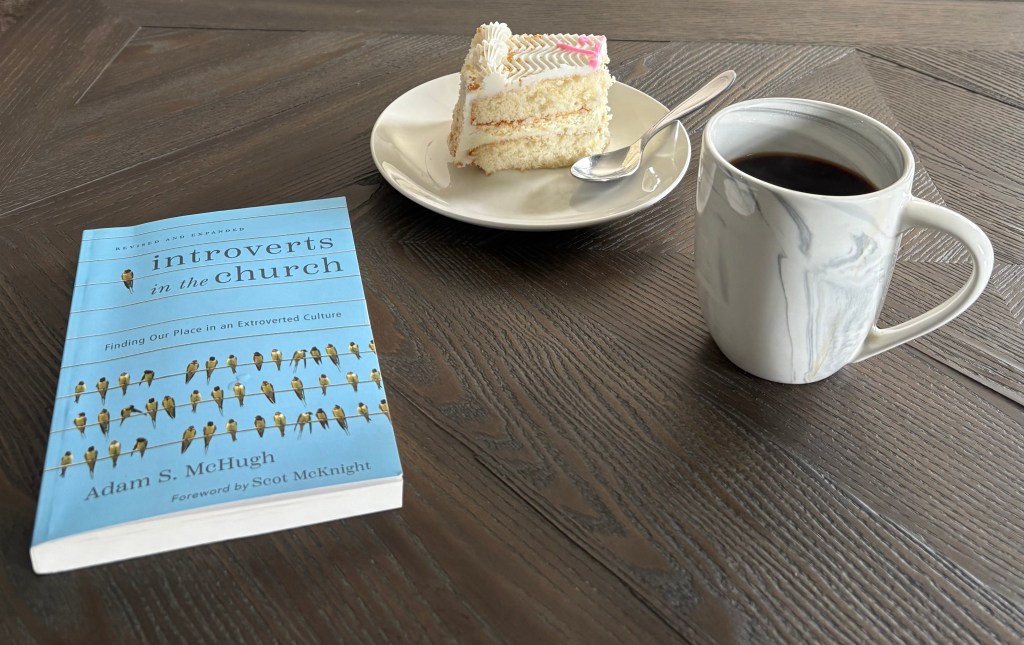
When I saw the title of the book I’m about to discuss, I told myself, “I have to read it.” Introverts in the Church by Adam S. McHugh is a breath of fresh air and a great addition to the discussion about introverts and our place in this world. The book is a little over 200 pages and was first published in 2009, before Susan Cain’s book. Of course, her book had a broader impact because of its wider focus. My copy is the second edition, published in 2017.
The book does an excellent job addressing the tendency within the church to lean toward the extroverted side, often alienating introverts. These tendencies are most evident in some Protestant denominations, such as Baptists and Pentecostals, where loud services and high-energy interactions are the norm.
I know I struggled with this for years. After faking extroversion during the week in my military career, I found myself needing to save some of that same energy for Sundays. Exhausting, if you ask me. I’m not sure why we feel the need to attend what resembles a rock concert every Sunday, but that seems to be what’s “in” in some Christian circles. I don’t see that in the New Testament, but that’s a conversation for another day.
The book has nine chapters: The Extroverted Church, The Introverted Difference, Finding Healing, Introverted Spirituality, Introverted Community and Relationships, Can Introverts Lead?, Leading as Ourselves, Introverted Evangelism, and Introverts in the Church.
The first two chapters were the most helpful; the rest of the book seemed more directed toward church leadership and people who want to be deeply involved in the church as an organization—at least, that was my impression.
I think the author is spot on when he says, “In most evangelical circles, three theological anchors—an intimate relationship with God through Jesus, the centrality of the written Word of God, and active personal evangelism—are often expressed in strikingly extroverted ways” (p. 22).
I have to agree. Some people are just too loud about those three anchors. Some extroverted Christians are loud in their writing and unbelievably loud in how they speak. Even when what they are saying is incorrect, they seem to believe that volume equals truth.
If you add the idea that, in order to be godly, you must be highly sociable, it becomes clear why so many introverts struggle to fit into church life. Psychology professor Richard Beck notes that some churches equate spirituality with sociability (p. 23).
I also liked what the author says about church services in some denominations:
“Whereas in some church traditions you enter a sanctuary in a spirit of quiet reverence, in evangelical churches you walk into what feels like a nonalcoholic cocktail party” (p. 24).
I would have said “an alcoholic cocktail party,” because that’s what it sometimes feels like—but I suppose the author is trying to keep it clean.
Here’s what he writes about the historical roots of this shift in the United States:
“The First Great Awakening (1730–1755) led to the founding of several elite colleges, such as Princeton and Dartmouth. The Second Great Awakening (1790–1840) introduced an anti-intellectual bent to evangelical Christianity… emphasized that conversion must be an experience in order to be authentic… A wedge was driven between the emotions and the intellect, a divide that would endure for generations of evangelicals” (p. 27).
I added the time frames for clarification. Dr. Mark Noll explores this topic in detail in his excellent book, The Scandal of the Evangelical Mind. McHugh includes the following quote from Noll regarding evangelical culture:
“To put it most simply, the evangelical ethos is activistic, populist, pragmatic, and utilitarian. It allows little space for broader or deeper intellectual effort because it is dominated by the urgencies of the moment” (p. 29).
Here’s how Eugene Peterson, an American Presbyterian minister, scholar, and theologian, put it:
“American religion is conspicuous for its messianically pretentious energy, its embarrassingly banal prose, and its impatiently hustling ambition” (p. 30).
So remember this part of the review when you hear government officials talk about Christianity in the way they do—the consequence of that anti-intellectual shift that began in the late 1700s.
Chapter two begins with descriptions of introversion from Sigmund Freud and Carl Jung.
Freud described introversion as “an unhealthy self-preoccupation…a pathological step toward narcissism” (p. 36). Ouch—that hurt.
Here’s how Jung described it as “an introspective orientation, wherein a person finds primary energy within the self. Extroversion, on the other hand, is an outward orientation, where an individual finds primary energy outside of the self in the surrounding world” (p. 37). Ah—much better.
You can probably guess which one I prefer.
Then I read this passage, and my heart jumped with joy:
“One of the big mistakes extroverts make is to assume that if someone is not engaged with another person, that individual is simple not busy. So, it’s okay to interrupt someone sitting and reading because that person is probably reading only because there’s no one else with whom she can talk. You can only imagine what an extrovert thinks of someone who is sitting there not even reading but merely reflecting. Clearly that person needs to be put to some more useful task—such as listening to the extrovert’s thoughts of the moment.” (p. 43)
In page 46, the author summarizes introvert attributes: we relax alone, need rest after social activities, often listen more than we speak but can talk at length about meaningful topics, tend to think before acting, have strong powers of concentration, dislike small talk, and often prefer written communication, among other traits.
On pages 49–50, he highlights something fascinating about the brain. According to some studies, there are three significant physiological differences between introverts and extroverts:
First, introverts have naturally busier, more active brains.
Second, blood flows differently—introverts’ brains are more active in areas related to internal processing (memory, problem-solving, planning), while extroverts’ brains are more active in areas tied to external sensory experiences.
Third, there are chemical differences—extroverts rely more on dopamine, which supports quick thinking and high stimulation, while introverts rely more on acetylcholine, which promotes reflection and energy conservation.
In the remaining chapters, the author highlights areas that can help introverts grow in their Christian life, such as contemplative spirituality and embracing natural rhythms—identifying when we feel most energized and which habits support that. He also discusses rest cycles, study, reflective reading, journaling, and writing.
He then goes into detail about how introverts can be productive members of the Christian community, including evangelism, and what church leaders can do to ensure introverts are included in leadership, programs, group studies, and services.
Overall, this is an excellent book for introverts who are Christians. It’s also a valuable resource for extroverts in our churches so they can better understand us—and especially for church leaders. They need to be more in tune with the needs of introverts, who I would argue make up at least half of most congregations. There are many Christians quietly faking their energy levels every Sunday, and church leaders should recognize that—and do something about it.
About the author:1
Adam McHugh is the author of several books including Blood from a Stone and Introverts in the Church. He has worked as a hospice chaplain and as a sommelier. He is probably the only writer to have been published in both Psychology Today and Wine Enthusiast. He lives in the Santa Ynez Valley on the California central coast.
 Thoughts about leadership, history, and more
Great review! I have often felt uncomfortable in churches. I don’t want to shake hands with everyone sitting around me and tell them good morning. I feel awkward when people sing hymns, waving their arms in the air or holding up their hands to the sky. I don’t want to have a piece of paper that I read responses back to the preacher. I don’t want to dance.
However, I wouldn’t mind a church that quietly greeted me and allowed me to sit in peace. A church where I could sing along if I liked or just listen. Sermons I could listen to without participating. Friendly enough so I could talk to someone if I wanted to, but not feel forced to socialize with dozens of strangers.
LikeLiked by 1 person
Thank you very much. You described some of the things that I also don’t like, such as shaking hands with everyone around me and waving or raising my hands during worship. I don’t mind singing, but like you said, only if I want to. The second part you mentioned sounds wonderful, and I would like that too.
LikeLiked by 1 person
Great review, thanks for sharing, do you think that you are born an introvert or extrovert, or is it learned behavior or experience.
Great points on the church.
LikeLiked by 1 person
You’re very welcome. From what I’ve read, we’re born that way.
LikeLike
Thank you Edward. There’s a lot about me here and my experiences and opinions as an introvert. My wife and I had a discussion on church services and the expectations of the majority extroverted for everyone to go with the hype, and wonder why some congregants first move to the back pews and sometimes eventually leave because they can’t fake it, I mean the high and loud energy levels.
I said to my wife not very long ago that going to church used to be exciting and something I eagerly waited for, because it was calming and refreshing. But now, you are not sure whether you will come back stressed and we first have to review our previous experience before going to the same church. Something unnecessary in the past.
Well, thank you for sharing.
LikeLiked by 1 person
You’re very welcome, and thank you for sharing that. When I visit a new church, I usually sit in the back for that reason. Sometimes the service can feel overwhelming, so I like to be in a spot where I can leave quickly afterward. I’ve also noticed that some people arrive a little late to avoid handshakes and greetings, and often those same people leave before the service ends to skip the goodbyes. I hope churches will eventually adapt and learn how to better support introverts.
LikeLiked by 1 person
What a great book, and so spot on for so many of us introverted Christians. We’ve tried going to so many different churches, and are instantly swarmed by well-meaning extroverts loudly telling us what to do, what to think, what groups to join…. It seems like no one actually reads the Bible. They hurry up to hear what the exuberant church leaders say (who loudly broadcast their opinions instead of actual scripture — I’m thinking of Pete Hegseth’s quotes from the “Pulp Fiction” movie instead of the Bible… 😑 ), and then rush out to loudly decide everything for everyone else in the world….
LikeLiked by 1 person
It was a great read. I think the church is so focused on tweaking its “business model” to maximize growth, attracting more people and more money, that it can start to feel like a department store at the mall. As soon as you step in, people ask how they can help, follow you around, and remind you every few minutes that they’re there to answer questions. It’s annoying in a store, and definitely in a church.
I think churches need to back off a little and let people experience the moment at their own rhythm.
LikeLiked by 1 person
What a fascinating book review and perspective. I love your last line, “There are many Christians quietly faking their energy levels every Sunday, and church leaders should recognize that—and do something about it.”
When I think back to the kind of people who were great at welcoming our family to a new church when my dad would take a job – it’s the extroverts. Over time, my dad would get to know the introverts and loved their quiet, deep thinking perspective but it took time and work. I hadn’t thought of that until reading your great post.
Fantastic review and important topic. Love this, Edward!
LikeLiked by 1 person
You’re very welcome, Wynne. Thank you for sharing that experience about your dad. Over the years, I’ve learned to prepare myself during initial encounters with extroverts. I expect rapid conversation, lots of questions, and even the possibility of a hug, so I mentally get ready for that.
That said, I know many introverts who either don’t go to church or stop going after the first visit because the energy can feel overwhelming. The author is trying to figure out how to bridge that gap, which is very difficult. As you mentioned, it takes time and effort to be welcomed into an introvert’s inner circle.
Thank you again for such a wonderful comment, my friend.
LikeLiked by 1 person
I love that you prepare yourself – shows some great self-awareness so that you can show up for the depth!
LikeLiked by 1 person
Yes, for the depth, so important. Thank you, my friend.
LikeLike
Great review and helpful insights. Thank you.
LikeLiked by 1 person
You’re very welcome.
LikeLike
Wow! This post is really eye opening Edward. As a neurodivergent person I tend to be both very extroverted and very introverted … depending..
At church my experience led me to believe that the church was overwhelmingly unaware of the needs of those with ADHD who feel the need to worship with an abundance of exuberant..loudness.. I was shut down enough times that I feel much safer worshipping at home or in my car where noone else is around. That said, my daughter Stephanie and I have discussed how the church seemed to emphasize a sociability/ spiritual mandate that has made us a comfortable at times. ( I’m going to send her this post) Although I often crave social situations, some church’s emphasis that everyone in the surrounding pew ( is your family) which required one to greet and hug them before the pastor spoke, made me want to run for the door.
Absolutely loved the quotes you included in which pointed to earlier connections between evangelicalism and lack of thought. Stephanie and I have often been known to remark, “ this makes no sense, what on earth are they thinking? That’s not even Scriptural! “ That said, for much of my adult life I could be numbered among the “ holy rollers” , this after several years of nondenominational Baptist Sundays. In recent years I have leaned towards a Catholic perspective and our practice over here is Messianic.
Our bottom line is hanging out with the Lord. Attempting to follow Him where He calls … with the knowledge that not only ourselves.. but others are uniquely and wonderfully made.. full of foibles and fascinating wonders.. and to try to let others worship how they will.
That said… in recent years.. we fellowship informally.. at home.. with each other.. sometimes with friends.. and online. ..
We haven’t been to a denominational “ church” in years.
LikeLiked by 1 person
Thank you, Kimberly, for sharing your church experience, it sounds very familiar. The greeting of each other at the pastor’s cue right before the service starts can be annoying at times, and it’s clear that most people don’t like it, so I’m not sure why they insist on doing it. They should allow people to greet each other as they please, if they want to.
It sounds like you and Stephanie are enjoying a nice home church, which is biblical. Inviting some friends over is wonderful. I personally prefer that to the institutional church. At home, you can truly have fellowship. Good for you both.
LikeLiked by 1 person
This resonates on so many levels. I grew up in a very conservative church, but surrounded by musicians at home. Worship sessions were reverential, then band practice was…different. lol.
Then come my “call to ministry.” it occurred just at about the time the shift was happening, to a more upbeat worship style, almost pentecostal energy… not my speed. There is a time and place for everything.
I had my moments of delivering sermons, doing outreach, but my introverts’ soul prefers the quiet, the intimacy of meeting someone where they were at in their walk with God, and playing my role quietly.
It has been a more rewarding and effective use of my time, my energy, and my talents.
I appreciated this review, Edward.
LikeLiked by 1 person
Thank you for sharing your experience, and I hear you. For introverts like us, quiet and less is better.
LikeLiked by 1 person
Most certainly is.
You’re welcome, sir.
LikeLiked by 1 person
“American religion is conspicuous for its messianically pretentious energy, its embarrassingly banal prose, and its impatiently hustling ambition” (p. 30). this part, specially after what’s his face posted an ai pix of him as Jesus.
LikeLiked by 1 person
Exactly! Thank you, Rojie.
LikeLiked by 1 person
Such an interesting post! As a Catholic, I appreciate the quieter, more spiritual side of Christianity. I’m an introvert, too, so I would never have excelled at being an Apostle and evangelizing people. Loud doesn’t equal sincere. I’ve met hypocrites in all the religions I’ve studied and practiced. No matter what path I tried, I always came back to Christianity. My grandmother took my father to a Pentecostal service when he was a boy, and he never got over it. He was traumatized for life.
LikeLiked by 1 person
Thank you, Dawn. I was Catholic, and they really know how to do contemplative service. The author also pointed to Catholic, Anglican, and Orthodox settings as good environments for introverts. I attended a couple of Pentecostal services in Puerto Rico and, wow, they were intense. Two were enough for me.
LikeLike
Thanks for sharing your review, Edward. You mentioned so many apt and interesting points. I also grew up in a Southern Baptist church, and was a very religious child and young adult. But then preachers got… a little too friendly. Not abuse, but intentions of it. So similar to you, “Deeds, not words” was what I expected from them, and they didn’t deliver, so I moved on.” For the past 30 years I’ve considered myself
not religious” at all. I completely agree about many people simply being “too loud.”
Introverts? I had a boss who was stunned when I described myself as one. He thought I was absolutely an extrovert. “Now you know how hard I’ve worked to fake it,” I told him. And thank you, Edward, for pointing out just how much is going on in the mind of an introvert. This is a splendid post and a fine discussion. Hugs.
LikeLiked by 1 person
You’re very welcome, Teagan, and thank you for sharing your experience. I’ve been tracking the Southern Baptist Convention for years, and they have some major issues they don’t want to address. It’s really sad when leaders choose to protect the institution at all costs. And yes, our brains are extremely busy, so it’s good to take it easy once in a while. Thank you, my friend.
LikeLiked by 1 person
So much to love in this post, Edward…and cake, too? A winning combo! 😊💝😊
This book seems like a great find and I love the empowering tone of what McHugh’s offered. Your summary and review speak to me. The whole notion of pretending/forcing extroversion is something many struggle with and I’d never considered the aspect related to church leaders. Thank you for all of this!
LikeLiked by 3 people
Thank you, my friend. Cake and coffee, the perfect mix. McHugh definitely hit the spot with his book. I hope to read more on the subject, and I’m definitely going to read more about what Carl Jung said about introversion. ☕️➕🍰🟰😋
LikeLiked by 1 person
Yay!!! I love Jung’s perspectives. I think his theories stand up over time. Really good! Love this topic…go, Edward!
❤️😉❤️
LikeLiked by 1 person
Thank you. 🫶🏼
LikeLiked by 1 person
❤️😉❤️
LikeLiked by 1 person
From this and my desire to sit quietly must mean introvert. I would hate a loud partying church every Sunday but happy to party now and again!
LikeLiked by 1 person
I agree with you. I’m fine with the occasional party since it gives me time to prepare, but on a weekly basis, it’s just too much. Thank you.
LikeLiked by 1 person
This is fascinating and I am so glad someone had the decency to write a book about it. I am an introverted Christian, also a HSP (highly sensitive person). I didn’t know intro heads are busier than extro heads. I can relate to that, it is non stop, to the point of complete overwhelm and emotional burn out. If I did not know the Lord, I really do not now how I would cope. Thank you for sharing Edward.
LikeLiked by 1 person
You’re very welcome, Lana. I know, that’s why I was attracted to the book. No one is writing about this particular subject, so I’m glad I found this author. Something that’s helping me get my busy brain under control before my devotional time is a short mindfulness meditation I learned from a therapist. That short exercise, followed by prayer and Bible reading, has made a huge difference.
LikeLiked by 1 person
Beware of mindfulness meditation. i looked into it years ago and found it was just Buddhism repackaged to appeal to a bigger audience. Maybe your therapist did something differently, but I am just highlighting it as many peaceful things are very cunningly deceptive and go against God. I am a former new ager/psychic and plan to share my testimony on WP soon.
LikeLiked by 1 person
Oh, I hear you, and mine is just a breathing exercise to help me focus and relax. I learned it as part of my PTSD treatment through the Veterans Affairs. I’m definitely not into the New Age thing. I’m looking forward to reading your testimony. I like to watch documentaries related to that subject, cults, etc. It helps me understand people’s worldviews.
LikeLiked by 1 person
I relate deeply to the introvert attributes the author summarized, and yes, loud environments, religious or not, are definitely out of place for me. Draining to the max. I attended the baptism service twice, as family proforma, but I left both times with a giant migraine and no sense of sacred connection. Sometimes it seems to me that they just want the show to keep going rather than true divine communion. A very meaningful and interesting post and review, Edward! As an introvert, I enjoyed it very much! Lots of light and blessings your way, dear friend! ✨🙏
LikeLiked by 1 person
I agree with you. Loud, high-intensity environments drain my energy tremendously. I like music and enjoy concerts, but after the show I need some time to relax and recharge. You’re absolutely right about some people treating services like a show. I’ve heard of services going on for hours, with people speaking, singing, and playing rock style worship songs. That would be too much for me, especially when I’m looking for silent and divine communion. Thank you for commenting, my friend. 🙏🏼
LikeLiked by 1 person
This is a meaningful and timely reflection. It rightly challenges the quiet assumption that extroversion defines spiritual vitality. The reminder that introversion carries its own depth—through reflection, listening, and contemplative faith—is both affirming and necessary. A more inclusive church culture that values diverse expressions of faith would truly reflect the richness of the body of Christ.👍🏼
LikeLiked by 1 person
Absolutely! Diversity is the key. Thank you, John.
LikeLiked by 1 person
Great review!
LikeLiked by 1 person
Thank you, Donna.
LikeLiked by 1 person
The Peterson quote! 🤣
LikeLiked by 1 person
I know, right? Thank you, Ana.
LikeLiked by 1 person
I read Susan’s book, ‘quiet’ which is when I discovered I was technically an introvert, and find myself somewhere in the middle on some things, but mostly an introvert and am fine with that -. I’m not religious in a traditional sense so I haven’t had to deal with it in that realm, but in most other parts of my life I’ve adapted just fine
LikeLiked by 1 person
Same here after I read her book, it was a lifesaver for me. Thank you, Beth.
LikeLiked by 1 person
How interesting! By all the characteristics you’ve noted, I’m an introvert. Extroverterd preachers have always put me off. It feels like they’re trying to call attention to themselves.
Episcopal services when I grew up were very far from evangelical, extroverted affairs. Picture a congregation singing hymns of praise without moving their mouths.
LikeLiked by 1 person
Those kinds of preachers put me off also, as do people asking me if I’m a Christian, and even when I say yes, they ask me what kind, because apparently there are all kinds of flavors out there, and of course they have to present their version, which is the correct one. I’m picturing those Episcopal services, and they sound wonderful to me. Thank you, Liz.
LikeLiked by 1 person
You’re welcome, Edward.
LikeLiked by 1 person
Sometimes far left liberal churches like mine can feel like too much exuberant socializing upon entering too. I’ve always wondered what “Quaker Meeting” is like. I’ve heard it’s like total silence unless someone feels moved to speak.
LikeLiked by 1 person
Funny that you mention the Quakers because I was reading about them yesterday. I’m reading a book about Harriet Tubman, and it mentioned William Penn, who was a Quaker, so I did some reading, and their meetings are exactly how you described them. I was actually looking for one of their meeting places, but they are too far away. I’m ok with something in the middle. My ideal church would be a place where people gather each week to drink coffee while a theologian explains the Bible and its life application.
LikeLiked by 1 person
You are so well read and thoughtful. I would think you could lead a great Bible discussion yourself! Around here, the Congregational churches (also called UCCs) are liberal, thoughtful and definitely Christian. Also, some of the Episcopal churches. If I were Christian, I think I’d seek out one of those.
LikeLiked by 1 person
I’m currently searching for one, so thank you for the recommendation. I found a community-wide study group that meets during the week, and I’m going to check it out.
LikeLiked by 1 person
What an interesting insight into American Evangelism. It’s growing fast in Australia, which puzzles an introvert like me. Traditionally services in Australia didn’t need earplugs.
LikeLiked by 1 person
I know, it’s everywhere now. That’s what happens when the church shifts from a group of people simply trying to live life together to a business model focused on generating money. You have to give people excitement and a concert-style experience, right? I don’t think so. Less is definitely better in this case.
LikeLiked by 1 person
If nothing else, I love the your and the books focus. “It’s also a valuable resource for extroverts in our churches so they can better understand us—and especially for church leaders.” How many times have we heard about how introverts need to alter our tendencies to better”understand” or “thrive” in an extroverted world. Ha, ha. Love seeing the paradigm shifted the other way. Introverts unite!
LikeLiked by 1 person
Thank you, Brian. There is often a push for introverts to be more like extroverts, but what if the opposite is needed? We could probably solve world hunger and maybe even have fewer wars. I know a guy who should spend more time thinking and less time talking and tweeting. 😀
LikeLike
Exactly Edward, exactly. Ha, ha.
LikeLiked by 1 person
A thoughtful review of a book that sounds well worth reading. I’m comfortable interacting with my church family in my small, quiet, country church, but when I go to other activities at other churches, (prayer teas, church concerts, etc.) with people I don’t know, I tend to become part of the wallpaper. I don’t particularly want to socialize, but then I feel bad that I seem to be invisible, lol. Introversion is such a strange thing!
LikeLiked by 1 person
Thank you, Jean, and know you are not the only one. I feel the same way in those settings. I think the only time I felt extremely comfortable attending an event was a 24-hour prayer session. It was when I was living in Kansas and visiting the Church of the Nazarene. The pastor and staff were very good, and they knew their people well. You just needed to pick a time slot, show up, and quietly pray for however long you wanted. The staff was there to keep the church open and support members if they needed something, but no one said a word, and everything was extremely quiet and peaceful.
LikeLike
That sounds wonderful, Edward!
LikeLiked by 1 person
It was.
LikeLike
I am definitely not an introvert, but hope that won’t exclude me in this circle. Whatever our personality, in Christ we do still not only belong to one another but we need each other precisely because of our differences.
LikeLiked by 1 person
Thank you, Pastor Pete. Everyone is welcome to my blog, especially extroverts. I absolutely agree with you, we just need extroverted church leaders to bring it down a notch and make space for introverts to fellowship the way we are and without judgment. 😀 Thank you for reading and commenting.
LikeLiked by 1 person
Funny – I wrote about that taboo subject – religion – on my blog as well. I’ve been to quite a few church services – all different kinds but I prefer the interactive services with wild and crazy singing and foot stomping, hugging and praising the Lording. Work up a sweat for the Lord!
However, I am quite shy.
LikeLiked by 1 person
Awesome! I can imagine you working up a sweat during a worship service. You just made my day with that line. I’m going over to read yours shortly.
LikeLike
Great review on what sounds like a very good read, Edward. I have to share a little memory that came back when I read your commentary on Freud’s vs Jung’s takes on introversion. When I was in first year of nurses’ training, our psychology instructor was, in each few classes, hi lighting the major therapists. My favourite was Maslow, with Rogers a close second. Jung was so-so for me, and Freud was, in my opinion, completely out to lunch and I stated as much in class when the instructor asked me why I was laughing at Freud’s theory. Thanks for that memory from 1973, Edward.
LikeLiked by 1 person
Thank you so much for your comment and for sharing that memory. 1973—that’s a great year.
LikeLiked by 1 person
I’m guessing you were born when I started nurses’ training (and I even waited a bit more than a year after my high school graduation before deciding on my career path) You’re a youngster 😉
LikeLiked by 1 person
Yes, you guessed right. Thank you. 😊
LikeLiked by 1 person
Great review Edward… Hmm, just your review alone gave me things to think about… I’m a little of both, it depends on where i am and how comfortable I feel. At church, I’m an extrovert but everywhere else, even at family events I tend to be an introvert. Again, it depends on the place and time. As for worship music, well if I’m feeling it and moving it (hahaha)
LikeLiked by 1 person
Thank you, Willie. That’s interesting. I’m actually pretty good around family and friends, I get tired after too much talking, but not as much as when I’m in public settings with others. With worship music, all you’re going to get from me is head nodding and foot tapping. 😂
LikeLiked by 2 people
🤣🤣. No. Not me. And don’t get me started on Salsa music and old sko at family gatherings. 🤣🤣🕺🏼🕺🏻🕺🏼🕺🏻
LikeLiked by 1 person
😂 Well, Salsa is different, my friend. Awesome!
LikeLiked by 1 person
Ehh. Sometimes 🤣😁😆
LikeLiked by 1 person
Yes!
LikeLiked by 1 person
The most practical and easily understood difference between introverts and extroverts is that the introverts find energy outside of human contact in groups, thus taking time alone and away from people to accomplish ii, while the extroverts find energy with people. Thanks for offering your always excellent reviews, Edward.
LikeLiked by 1 person
Perfect and right to the point. It’s so important that people understand that. Thank you, Dr. Stein.
LikeLiked by 1 person
I have taken to wearing earplugs to church because it’s like a rock concert every Sunday 😦
LikeLiked by 3 people
Good idea! I hadn’t thought of that. Thank you.
LikeLiked by 1 person
This is interesting to ponder, Edward. I believe I’m more introverted but can mingle when need be. Perhaps most writers are like this. We observe, contemplate, process. The book sounds interesting, but I’m happy you reviewed it. I don’t feel the urge to go further.
LikeLiked by 1 person
Thank you, Mary. I’m the same way, and I think the Catholic community is different and more inviting for introverts, so I agree with you about reading this book.
LikeLiked by 1 person
As per usual, this post made me think….introverts vs extroverts in the church. I can totally understand how introverts might feel excluded!
The cake looks delicious 😊
LikeLiked by 1 person
Right? So good with the coffee. Now I just need to burn the 2,000 calories I just added by eating that. Thank you, my friend.
LikeLiked by 1 person
By the way Edward, it’s been snowing alllll day and not supposed to stop til tomorrow night 🤭
LikeLiked by 1 person
Nooo… I might need to call Mark Carney and ask, “What’s up with that?” That place you’re talking about is looking more enticing every day.
LikeLike
I’m a proud introvert too!
LikeLiked by 2 people
Excellent! Thank you for reading and sharing that.
LikeLiked by 2 people